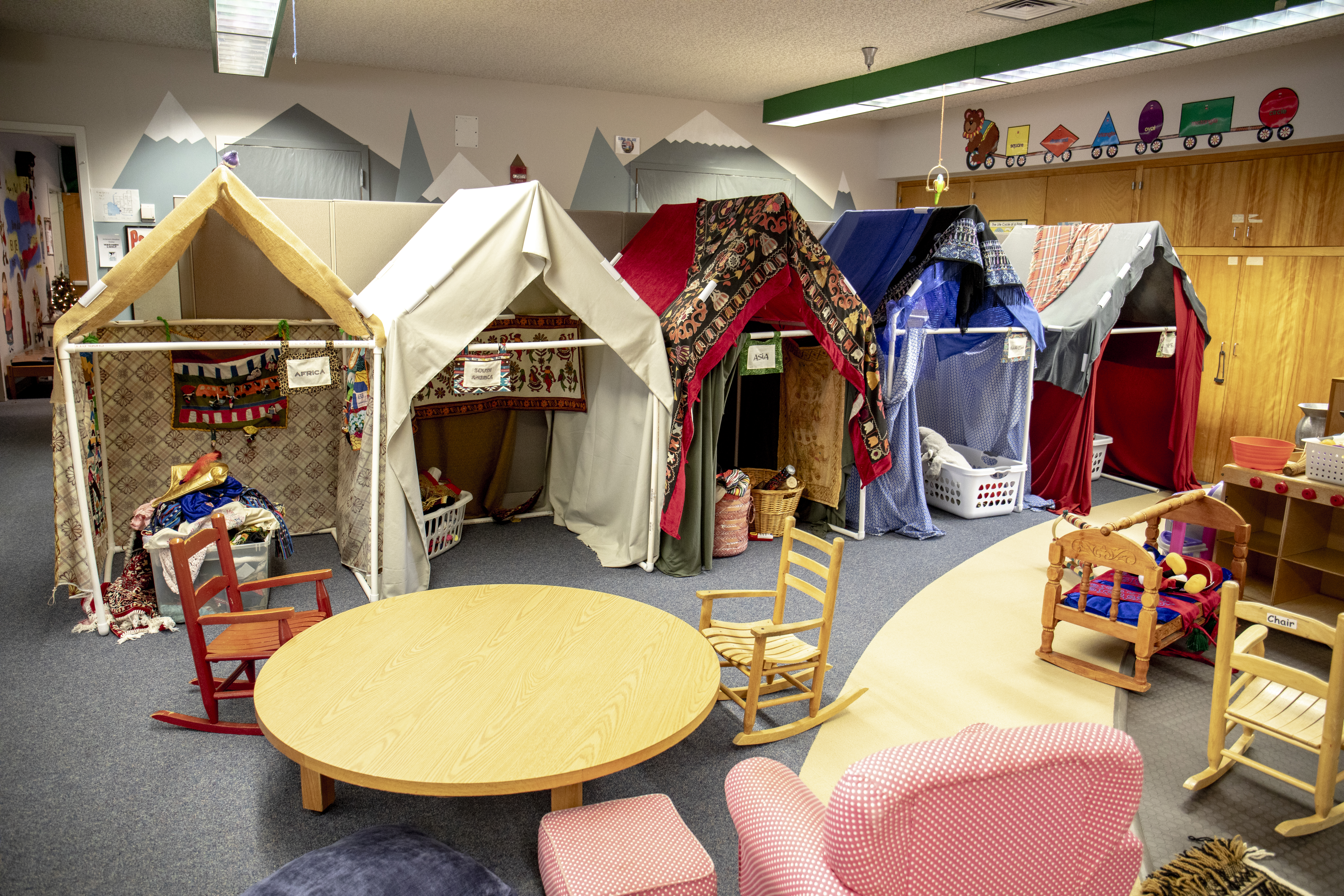
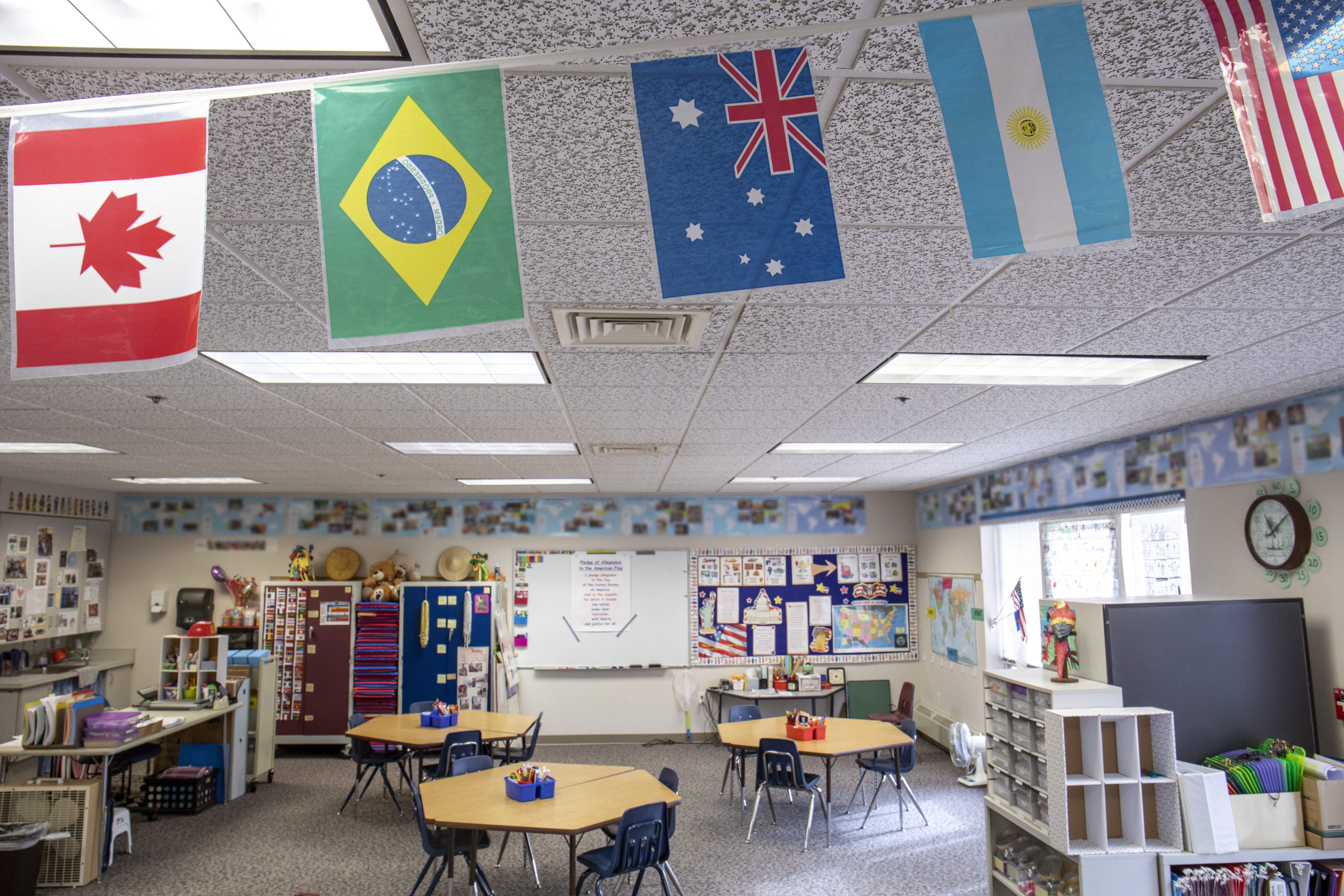
Training for missionary service includes preparing children to enter the mission field. And just as adults need debriefing at stateside conferences, kids need it too. We interviewed three staff members, two of whom are alumni, who serve Third Culture Kids (TCKs) to hear more about their roles, what led them to serve, and the importance of TCK care.
1. What is your role?
Ben Brinkley: My title is education program manager. My main responsibilities are managing our temporary workers, supervising our TCKs serving during their summer breaks, leading high school stateside assignment conferences, and organizing the ReEntry Retreat for incoming first-year college students.
Susan Prewett: I teach the upper elementary and middle school kids as they attend orientation and stateside programs. During program time, my role is providing classroom instruction for our returning TCKs and our TCKs in training. Prep weeks are used to adjust curriculum to meet the age-appropriate needs and interests of incoming students.
Sherry Alston: I serve as the program coordinator for the children's training area of the IMB. I handle the paperwork and coordination for the students for our programs: four orientations, five stateside conferences, and one ReEntry Retreat. Paperwork includes information about allergies, educational information, field trip forms, etc. I also coordinate with other departments for program needs and outside resources for field trips and special events during the program.
3. What are some of the things TCKs learn as they go through the children’s training?
Susan Prewett: With students attending stateside conferences, I want to create a safe atmosphere for kids to debrief and bond over shared experiences and interests. Our kids can feel like outsiders when overseas, so it is heartwarming to see them sharing laughs and inside jokes. TCK peers can relax with each other quickly. I want to provide the space for them to do that so when more sensitive emotional or spiritual topics come up, they already feel a sense of acceptance, trust, and the ability to share more easily if they want to.
3. What is the importance of caring for TCKs?
Ben Brinkley: Caring for our TCKs is vital to the success of our personnel. I believe children's issues is one of the top three reasons our personnel leave the field. Preparing, engaging, and debriefing the students plays a major role in their success. My job really focuses on the tail end of their time with the IMB: high school and going to college. I want to help these students transition back to the U.S. and succeed. If they can thrive during this time, we have a generation of students who love the Lord, understand the importance of missions, and want to be a part of ministry.
4. What is the most rewarding part of your job?
Susan Prewett: Like most teachers, the most rewarding part of my job is when I see the lights come on during teachable moments. However, in our setting, those moments can be extra sweet as the learning can be spiritual and the "lights" more satisfying. On a more practical note, our program tries to offer a variety of activities so that each child's interests or strengths can come out in unexpected ways. I think we all want to give each student a little place to shine or be appreciated for their unique skills and experiences without feeling like they are being singled out for being the "missionary kid."
Sherry Alston: I truly believe I have the best job ever — I LOVE my job! Every day, a representative from the school-aged classes brings me the attendance. I get to chat with them one-on-one to get to know them better, ask them for their prayer requests, and then pray together before they go back to class. This is my favorite part of my job! Reminding them of the importance and power of prayer is very important to me.
Training for missionary service includes preparing children to enter the mission field. And just as adults need debriefing at stateside conferences, kids need it too. We interviewed three staff members, two of whom are alumni, who serve Third Culture Kids (TCKs) to hear more about their roles, what led them to serve, and the importance of TCK care.
1. What is your role?
Ben Brinkley: My title is education program manager. My main responsibilities are managing our temporary workers, supervising our TCKs serving during their summer breaks, leading high school stateside assignment conferences, and organizing the ReEntry Retreat for incoming first-year college students.
Susan Prewett: I teach the upper elementary and middle school kids as they attend orientation and stateside programs. During program time, my role is providing classroom instruction for our returning TCKs and our TCKs in training. Prep weeks are used to adjust curriculum to meet the age-appropriate needs and interests of incoming students.
Sherry Alston: I serve as the program coordinator for the children's training area of the IMB. I handle the paperwork and coordination for the students for our programs: four orientations, five stateside conferences, and one ReEntry Retreat. Paperwork includes information about allergies, educational information, field trip forms, etc. I also coordinate with other departments for program needs and outside resources for field trips and special events during the program.
2. What are some of the things TCKs learn as they go through the children’s training?
Susan Prewett: With students attending stateside conferences, I want to create a safe atmosphere for kids to debrief and bond over shared experiences and interests. Our kids can feel like outsiders when overseas, so it is heartwarming to see them sharing laughs and inside jokes. TCK peers can relax with each other quickly. I want to provide the space for them to do that so when more sensitive emotional or spiritual topics come up, they already feel a sense of acceptance, trust, and the ability to share more easily if they want to.
3. What is the importance of caring for TCKs?
Ben Brinkley: Caring for our TCKs is vital to the success of our personnel. I believe children's issues is one of the top three reasons our personnel leave the field. Preparing, engaging, and debriefing the students plays a major role in their success. My job really focuses on the tail end of their time with the IMB: high school and going to college. I want to help these students transition back to the U.S. and succeed. If they can thrive during this time, we have a generation of students who love the Lord, understand the importance of missions, and want to be a part of ministry.
4. What is the most rewarding part of your job?
Susan Prewett: Like most teachers, the most rewarding part of my job is when I see the lights come on during teachable moments. However, in our setting, those moments can be extra sweet as the learning can be spiritual and the "lights" more satisfying. On a more practical note, our program tries to offer a variety of activities so that each child's interests or strengths can come out in unexpected ways. I think we all want to give each student a little place to shine or be appreciated for their unique skills and experiences without feeling like they are being singled out for being the "missionary kid."
Sherry Alston: I truly believe I have the best job ever — I LOVE my job! Every day, a representative from the school-aged classes brings me the attendance. I get to chat with them one-on-one to get to know them better, ask them for their prayer requests, and then pray together before they go back to class. This is my favorite part of my job! Reminding them of the importance and power of prayer is very important to me.
Please pray for new TCKs as they transition to the field, for older TCKs as they transition to college and the U.S., and for all those in the in-between! Additionally, consider supporting the children’s training center by purchasing an item from their Amazon wish list that will be shipped directly to them. Here’s the Amazon link. When the item is in your cart, make sure you select the “MK/TCK Wish List's Gift Registry Address” option under your shipping addresses.
If you order something off the list, please send us a note at [email protected] so we may provide you with a report on how your donated supplies were used.
If you would like to know more about contributing at a deeper level, consider visiting the Missionary Kid Education and Spiritual Growth campaign page.
Meeting needs and supporting families are some of the most rewarding parts of TCK education, according to Doreen, the IMB’s director of TCK education. The goal is supporting IMB families so they can thrive as a family and in the ministry God has called them to.
Doreen was a special education teacher for seven and a half years before serving with her husband, Jon, in Asia for 27 years. Before their retirement from the field, Doreen was a regional TCK consultant.
In her current role, she is responsible for the global team of education consultants who facilitate educational needs for IMB families, whether it’s finding the best homeschool curriculum or vetting national or Christian schools. Consultants walk alongside families whose children need additional help with educational testing, special needs, and any other educational needs.
Doreen’s team also provides adult TCK care, through events like Thanksgiving retreats and an app to promote communication. Her team works preemptively with families to meet their children’s needs.
“We really don't want to just meet a need when it's gotten so far, we are working on earlier intervention,” she said.
A lot of that is educating families on what to look for in their child. For families with students who have learning needs, the consultants collaborate with the family to create a student support plan to determine appropriate strategies. The consultant meets with the family periodically to monitor progress and assist as needed. For families who have special needs, the team creates an individual education plan and collaborates with the family to select strategies. They meet with parents for periodic assessments.
“I think families have felt really supported by our company and by the consultants working with them,” she continued.
Thank You, Father, for the IMB’s commitment to caring for our TCKs and for the work the TCK education team does to faithfully support missionaries. Please give them wisdom and joy as they seek to meet the educational needs of IMB TCKs.
Hannah grew up in Asia as a Third-Culture Kid (TCK) and saw some TCKs crash and burn when they moved to the U.S. Looking back, she saw some common threads that may have contributed.
Hannah is a TCK-focused member care consultant based in Richmond.
“Member care exists to help missionaries be spiritually, emotionally, and relationally healthy on the field, and so I think TCK member care is an extension of that,” Hannah said.
She focuses on these three areas of health with TCKs and supports families as they learn what they need to care for their children.
Hannah works with families in the application process, at orientation training in Richmond, and who are on stateside assignment with TCK member care needs. She attends TCK classes to talk about God’s good design for emotions. She also meets one-on-one with some TCKs.
Her role is new, and as she talks with parents who are headed to the field for the first time, she shares about what to expect during their transition overseas, transition stress symptoms, challenges their children will face, and how they can walk beside their children. She also shares about issues TCKs might encounter as they get older.
She explains to parents that, for kids moving overseas, it’s not easier or harder than their parents moving overseas, it's just different. Impressions are made on children’s developing brains when they move to another country. A TCK’s roots go deeper into the cultures they grow up in than an adult’s ever will because their impressionable years are spent overseas. Their identity will feel complex, she explains.
Transition at any age is difficult, but that’s especially true with elementary, middle school, and high school-aged children, and she encourages parents to intentionally and openly talk about identity and transition.
Thank You, Father, for Hannah and the life experience You have used to prepare her for this new role. Please continue to give her and the TCK member care team wisdom. We pray for teenagers and other children who might have especially challenging times during transition. Guard their hearts and help them to cling to You as they find their own place in The Great Pursuit.
Hannah grew up in Asia as a Third-Culture Kid (TCK) and saw some TCKs crash and burn when they moved to the U.S. Looking back, she saw some common threads that may have contributed.
Hannah is a TCK-focused member care consultant based in Richmond.
“Member care exists to help missionaries be spiritually, emotionally, and relationally healthy on the field, and so I think TCK member care is an extension of that,” Hannah said.
She focuses on these three areas of health with TCKs and supports families as they learn what they need to care for their children.
Hannah works with families in the application process, at orientation training in Richmond, and who are on stateside assignment with TCK member care needs. She attends TCK classes to talk about God’s good design for emotions. She also meets one-on-one with some TCKs.
Her role is new, and as she talks with parents who are headed to the field for the first time, she shares about what to expect during their transition overseas, transition stress symptoms, challenges their children will face, and how they can walk beside their children. She also shares about issues TCKs might encounter as they get older.
She explains to parents that, for kids moving overseas, it’s not easier or harder than their parents moving overseas, it's just different. Impressions are made on children’s developing brains when they move to another country. A TCK’s roots go deeper into the cultures they grow up in than an adult’s ever will because their impressionable years are spent overseas. Their identity will feel complex, she explains.
Transition at any age is difficult, but that’s especially true with elementary, middle school, and high school-aged children, and she encourages parents to intentionally and openly talk about identity and transition.
Thank You, Father, for Hannah and the life experience You have used to prepare her for this new role. Please continue to give her and the TCK member care team wisdom. We pray for teenagers and other children who might have especially challenging times during transition. Guard their hearts and help them to cling to You as they find their own place in The Great Pursuit.
The best way to stay connected and ensure you learn about special opportunities in your area is to update your contact information.
Send us feedback, tell us about upcoming alumni gatherings, share about your ministry, request prayer, ask questions — we want to hear from you!
Are you a member of our Alumni Facebook Community?